


If you have just discovered this game, you probably have one simple question: what is Sorare and what exactly do you do here?
I asked myself the same thing when I joined in 2022. At first, Sorare looked like fantasy football mixed with digital card collecting. That description was technically correct… but it barely explained why people actually played it.
Four years later, I see Sorare as a mix of fantasy sports, card collecting, squad building, trading, and improving my football knowledge. You collect digital player cards, build lineups with them, and earn points based on what those footballers do in real matches.
The platform has changed a lot since I created my account. Sorare in 2026 is much easier to enter without spending any money, while experienced managers still have plenty to do with their existing card collections.
So, what is the meaning of Sorare and how does Sorare work today, and do you actually need to spend money to enjoy it? In this article, I’ll break down the platform from the ground up and make sure you understand it as a (potentially) new user.
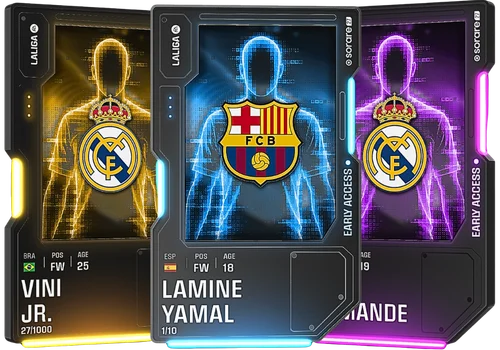
Join Sorare with code SORARECEO to get free $150 for your first cards.
SORARECEO
COPY
SorareCEO.com is a certified affiliate partner of Sorare. This is an exclusive bonus for my readers.
What is Sorare in 60 seconds

Sorare is a fantasy sports and digital card collecting game based on real football. You collect Sorare cards representing real players, build lineups, and score points from their performances in actual matches.
Think of Sorare as fantasy football built around player cards. Instead of selecting any footballer from a simple list, your available cards determine many of the players you can use.
Each card represents a real footballer. When that footballer plays a real match, his actions produce a Sorare score. Sorare uses football data to turn goals, assists, tackles, saves, mistakes, and many other actions into fantasy points.
You then combine several player cards into a lineup. Your goal is simple: pick players who perform well enough to help your lineup reach rewards or beat other managers.
There is also a collecting side. Sorare has different card types and scarcity levels, while some cards can be bought and sold between managers. This means your decisions do not stop when you submit a lineup.
I noticed this difference quite quickly after joining in 2022. I was not simply picking five footballers for the weekend. I was slowly building a collection that affected which strategies I could use later.
Sorare in one simple example
Let’s make what Sorare is easier to understand with a basic example.
Imagine you have cards of five footballers: one goalkeeper, one defender, one midfielder, one forward, and another outfield player. You enter them into an eligible Sorare competition.
Now the real matches begin.
Your goalkeeper makes six saves. Your defender keeps a clean sheet. Your midfielder assists a goal, while your striker scores. Sorare converts those real actions into individual player scores.
Those scores combine into your lineup score. Depending on the competition, that result can move you up a leaderboard, help you progress through a challenge, or put you closer to a reward.
Next time, you might change your lineup because one player has a difficult fixture. Maybe another player is injured. Perhaps you buy a card because you think that footballer is about to get more minutes.
That loop is basically Sorare. Collect players, follow real football, build lineups, score points, and improve your squad over time. The deeper strategy comes later… and there is plenty of it. But if you understand this example, you already understand the basic answer to what is Sorare.
How Does Sorare Work?

Once you understand what Sorare is in a nutshell, the next question is obvious. What do you actually do after creating an account?
💡 Pro tip: if you do think about creating an account, make sure to use my Sorare code which gives you free $150 in market credits.
The basic Sorare gameplay loop is quite easy to understand. You collect footballers, build lineups, follow their real matches, earn points, and continue developing your club.
I know Sorare can look much more complicated from the outside. I felt the same way in 2022. Once you understand this basic loop, though, the rest of the platform starts making much more sense.
Check out the infographic I prepared below to quickly understand the mechanisms of the gameplay.
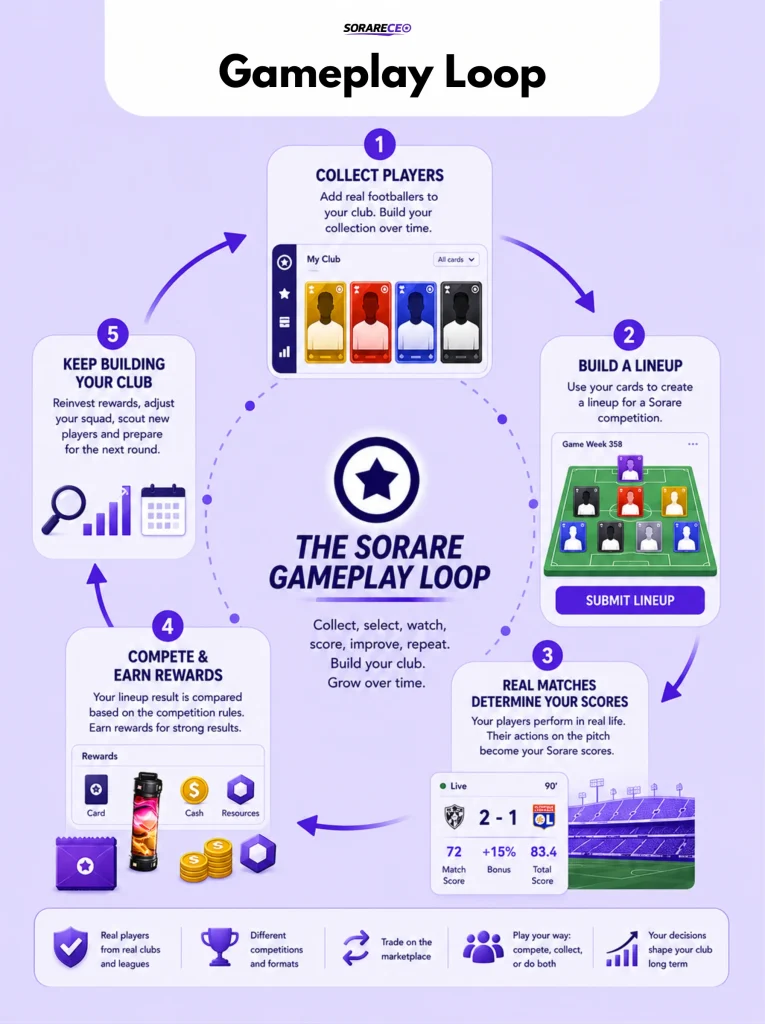
1. Collect players
Your Sorare club starts with player cards. These cards represent real footballers from leagues and competitions around the world.
You don’t need to understand every card type immediately. You simply need players who can help you build eligible lineups. As your club grows, you can add more footballers and create more options for different competitions.
This is where football knowledge already becomes useful. A famous name isn’t automatically the best choice. Playing time, form, fixtures, injuries, and a player’s role for his club can matter much more.
2. Build a lineup
Next, you use your available cards to create a fantasy lineup for a Sorare competition.
The exact lineup rules depend on the game mode you choose. Some competitions use different formats and restrictions, so there isn’t one lineup structure that applies everywhere.
At this stage, your job feels similar to managing a fantasy football team. You decide who deserves a place and who should sit this one out.
I spend much more time on this decision than I’d like to admit. A player can look perfect on paper but then you notice he played 90 minutes three days earlier and rotation suddenly becomes a real concern.
3. Real matches determine your scores
After submitting your lineup, Sorare connects your selected players with what happens in their real football matches.
If your players perform well, they can produce strong Sorare scores. If they struggle, your lineup usually suffers too. A player who doesn’t play can create an even bigger problem.
You don’t control anything once the football starts. There are no virtual matches to simulate and no buttons to press during a game. Your decisions happen before and around the real fixtures.
This connection with actual football is a huge part of what Sorare is. Suddenly, a league match you would normally ignore can become very interesting because your goalkeeper is starting.
4. Compete and earn rewards
Your player scores combine into a final lineup result. Sorare then uses that result according to the rules of the competition you entered.
Depending on the game mode, you might compete against other managers or work toward a points target set by the game.
Successful lineups can earn different rewards. These may include player cards, Essence, cash, or other resources used within Sorare.
We will look at rewards properly later. For now, the important point is simple: better football decisions can give your club more resources to work with.
5. Keep building your club
Then the cycle starts again.
You can use what you earned, adjust your squad, scout new players, rethink bad decisions, and prepare for upcoming fixtures. Your club develops as you continue playing.
This part hooked me more than I expected when I started. One lineup quickly turns into questions about next week, another competition, an injured player, or somebody you have been scouting for a month.
And unlike a traditional fantasy season that simply resets your entire experience, Sorare puts much more emphasis on building something over time.
So if someone asks me how does Sorare work, I usually explain it like this: collect, select, watch, score, improve, repeat. Everything else adds more strategy around that basic loop.
What Makes Sorare Different From “Normal” Fantasy Football?

If you already play fantasy football, parts of Sorare will feel familiar. You pick real players, follow matches, and hope your selections perform.
The big difference is what happens around those lineups. In most fantasy games, you build a temporary squad within a budget. Sorare puts much more focus on building a collection that stays with your club.
This is an important part of understanding what Sorare is. You are not only managing this weekend’s lineup. Your previous decisions can affect what you are able to do months later.
Again, my infographic below should give you an awesome quick insight into the main differences between Sorare and traditional fantasy football games.
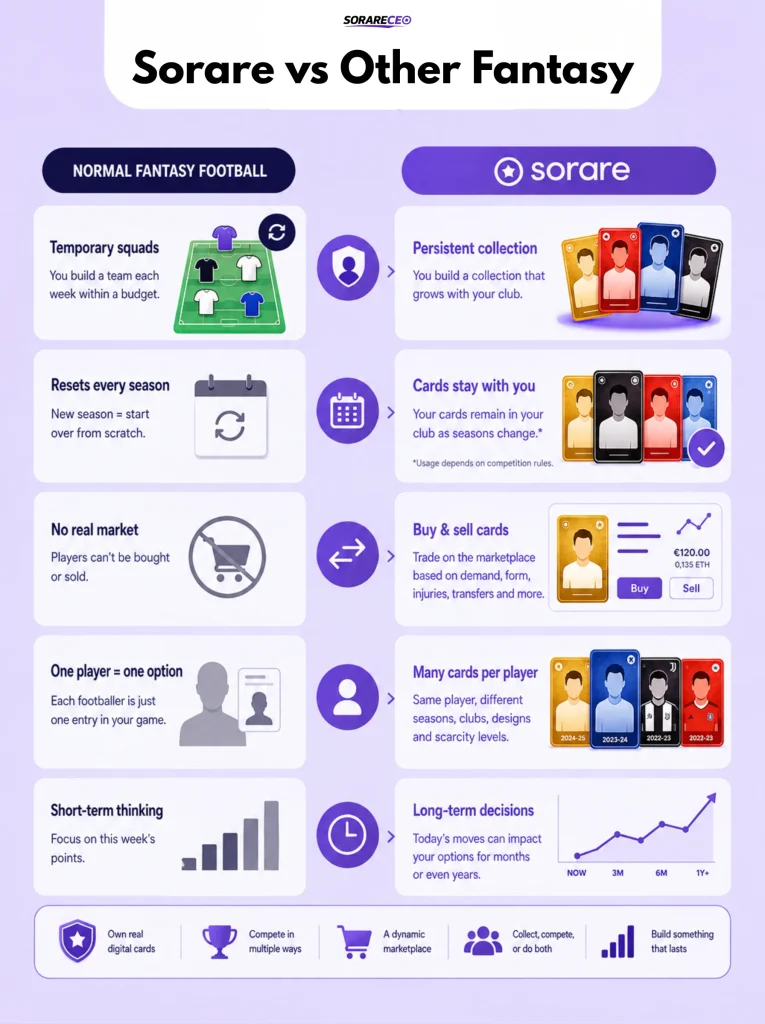
You build a persistent collection
On Sorare, your collectible player cards form your club. As you add cards, you gradually create more lineup options and different ways to approach competitions.
I started with a tiny Limited card collection in 2022. Over time, individual purchases and rewards turned it into something much larger. That progression changes how you think about the game.
You might buy someone for an immediate fixture, but you can also target a player because you expect to use him throughout the season or even next year (young talents are a good example of this). Sometimes you are thinking even further ahead.
Your players don’t disappear after every season
A new football season does not automatically wipe your collectible cards from your Sorare account.
If you own a card from an earlier season, you still own it when the next season begins. Whether and where you can use that card depends on the current competition rules.
This creates continuity. You don’t necessarily return to zero every summer and rebuild the exact same type of squad from scratch.
Join Sorare with code SORARECEO to get free $150 for your first cards.
SORARECEO
COPY
SorareCEO.com is a certified affiliate partner of Sorare. This is an exclusive bonus for my readers.
Older cards can remain useful, while newer cards may receive advantages in competitions designed around current season cards. I’ll explain what happens to cards over time in a dedicated section later.
Cards can be bought and sold
Sorare also has a marketplace. Collectible cards can change hands instead of existing only as temporary fantasy selections.
This adds another decision to the game. You can keep a player because you want his scores, sell the card, or look for somebody who fits your club better.
I’ve made plenty of good and terrible decisions here. Sometimes I bought a player before a strong run. Other times, I watched his minutes disappear shortly after buying him (that one never gets fun).
Card prices can change as demand changes. Playing time, transfers, injuries, age, competition utility, and expectations can all influence what another manager is willing to pay.
That doesn’t mean you need to become a trader. Plenty of managers care far more about fantasy competitions. Still, buying and selling gives Sorare another layer that most traditional fantasy games don’t have.
The same footballer can have different cards
One detail often confuses new managers. There isn’t simply one universal Sorare card for each footballer.
The same player can have cards from different seasons, clubs, designs, and scarcity levels. Two cards can therefore show the same footballer without being identical collectibles.
They can also have different usefulness depending on the competition rules. This is why experienced managers usually look beyond the player’s name before buying anything.
Don’t worry about learning every card difference yet. The next section explains why Sorare uses player cards in the first place, what those cards represent, and why scarcity matters.
Why Does Sorare Use Player Cards?

Player cards sit at the center of Sorare. They connect the collecting side of the platform with the fantasy game you actually play.
Instead of giving every manager unlimited access to every footballer, Sorare makes players available through cards. Your collection therefore influences which lineups you can build and which strategies are realistic for your club.
This is another useful answer to the question of “what is Sorare”. The cards aren’t just pictures sitting inside your account. They give structure to the game.
What does a Sorare card actually represent?
A Sorare card represents a specific real world player. It includes information such as the footballer, season, club at issuance, serial number, and scarcity.
Most importantly, you can use eligible cards in Sorare competitions. The footballer shown on the card provides the real match performances that determine its fantasy score.
So, if I own a card of a midfielder who changes clubs, I don’t suddenly own a card of his replacement. My card continues to represent that same footballer but at his new club (and possibly, new competition).
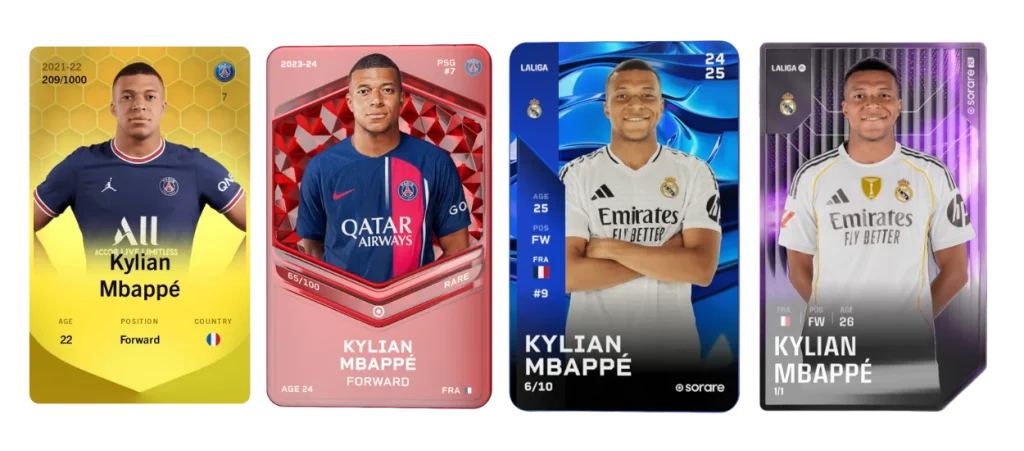
There are also different versions of cards. You might come across cards from different seasons or special editions of the same player. That gives Sorare a collecting layer alongside the fantasy game.
Why do Sorare cards have scarcity?
Collectible Sorare cards aren’t issued in unlimited quantities. Sorare uses different scarcities to limit how many cards of a player can exist within a particular issuance.
The 4 collectible scarcities you’ll encounter are Limited, Rare, Super Rare, and Unique. They use different supply limits and play different roles across Sorare competitions.
A Unique card sits at the extreme end, with only one issued for that player within the relevant season issuance.
Other scarcity levels have larger supplies:
- Limited – 1000
- Rare – 100
- Super Rare – 10
This limited supply matters because managers can want the same footballer at the same time. If thousands of us could simply click “add” and receive the exact same collectible card, building a collection would require very few choices.
Scarcity forces trade offs. You cannot own everyone, and neither can everybody else. And I think this is where Sorare starts feeling very different from a standard fantasy game. Finding a footballer you like is only step one. You also need to consider which version of his card makes sense for what you want to play.
Why does owning the right players matter?
A huge collection doesn’t automatically make a strong Sorare club. Having cards you can actually use is far more important.
A star player who rarely starts at his new club won’t help much. Neither will an injured player when you need a lineup today. The same applies when a card doesn’t fit the competition you want to enter.
This makes scouting useful even if you have no interest in becoming a football expert. You start paying attention to starting roles, injuries, transfers, schedules, rotation, and upcoming fixtures.
I learned quite early that buying the biggest name isn’t always the smartest move. A reliable starter from a smaller club can sometimes solve far more problems for your Sorare lineups.
That is why your collection becomes part of the strategy. You aren’t just asking, “Is this footballer good?” You are asking, “Will this card actually help my club?”
Now that the card system makes more sense, we can put everything together. Let’s play through one imaginary weekend of Sorare from lineup selection to the final result.
An Example of a Weekend of Sorare

Since you asked the question “what is Sorare?”, we’ve covered the basic theory, so now let’s make it more practical. The easiest way is to follow one imaginary lineup through a weekend of real football.
I won’t dive into every scoring rule or competition restriction here. We only need a simple example to see how your decisions connect with what happens on the pitch.
Building an example lineup
Imagine Friday arrives and you want to enter a Sorare football competition. You check your collection and start looking for players with matches coming up.
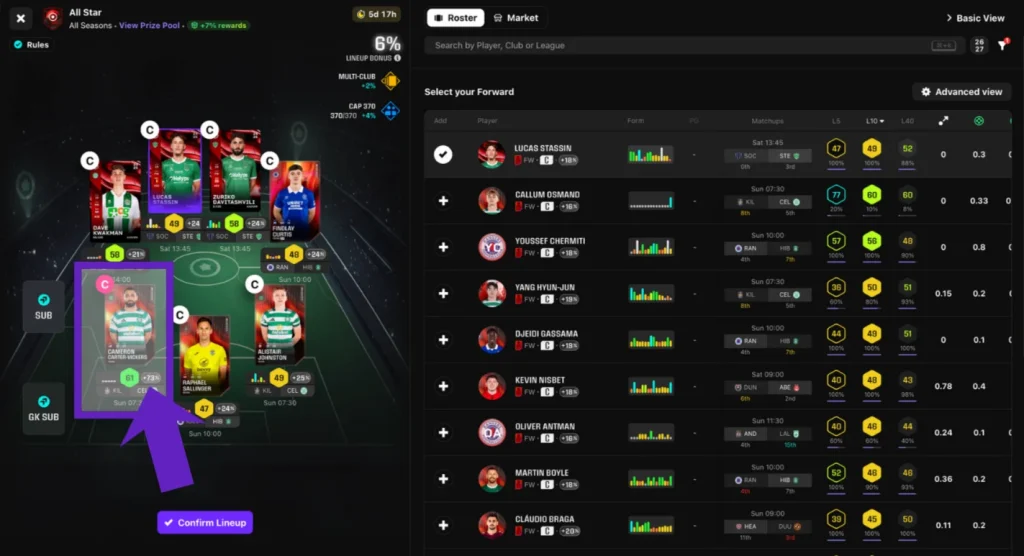
This is where your work as a manager begins. You don’t simply choose the five biggest names in your collection.
You check whether they are expected to start. You look at their opponents. You might notice an injury, suspension, difficult away match, or possible rotation.
I still do this every time I build serious lineups. A card can look great in my gallery, but that means very little if the player starts Saturday’s match on the bench.
After checking everything, you submit your five players. Your lineup is ready.
What happens during the real matches?
Now Sorare becomes a watching game.
Suppose your goalkeeper plays on Saturday afternoon and makes several saves. Your defender plays later and completes a strong match. So far, so good.
Then your midfielder gets an assist. Your forward scores. Suddenly, that Sunday evening match you would barely have noticed becomes very important.
This is one of my favorite parts of Sorare. I’ve watched completely random league matches because one player in my lineup could turn an average result into a great one.
Of course, it also works in the opposite direction. Your expected starter can begin on the bench, get substituted early, or simply have a poor match.
You selected the players, but real football decides what happens next.
How do performances become Sorare scores?
Sorare receives real match data and converts player actions into fantasy scores through its scoring system known as the Scoring Matrix.
Goals and assists can matter, but Sorare doesn’t judge footballers using those actions alone. Saves, tackles, passes, duels, chances created, cards, mistakes, and many other events can affect a player’s score.
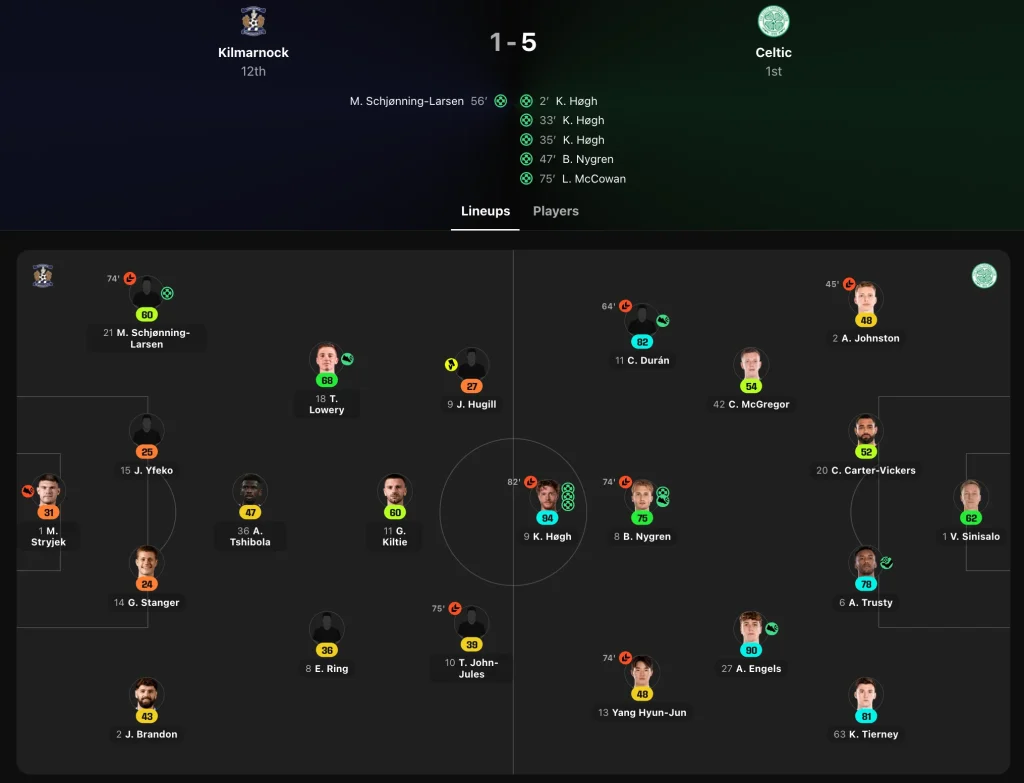
This is why two players who both finish without a goal or assist can produce very different Sorare results.
Each player’s match performance becomes a score on a scale from 0 to 100. Those individual scores then contribute to your overall lineup result.
There are additional bonuses and scoring details once you get deeper into Sorare. You don’t need them to understand the basic process yet.
For now, remember the connection: you select the card, the footballer performs in real life, and Sorare converts that performance into points.
What happens after the matches finish?
Once the relevant fixtures are complete, your lineup has its final result. What happens next depends on the competition you entered.
You might finish high enough on a leaderboard to earn something. In another mode, your score could help you reach a target or continue progressing through a challenge set by Sorare (such as the Hot Streaks).
Sometimes everything goes right. Sometimes one terrible score destroys a lineup that looked excellent two hours earlier. I’ve experienced both more times than I can count.
Then you move on.
You check what worked, look at upcoming fixtures, and start thinking about your next lineups. Maybe you need another goalkeeper. Perhaps a player has lost his starting position, or someone you already own suddenly has a great schedule ahead.
That single weekend captures the basic rhythm of Sorare. You make decisions before the matches, real football tests those decisions, and the result influences what you do next 🙂
What Can You Actually Do on Sorare?

By now, the basic answer to what Sorare is should be clear. But building fantasy lineups is only part of what you can do once your club starts growing.
Some managers focus almost entirely on competitions. Others enjoy collecting or trading. Personally, I’ve always liked the combination. I can spend one evening building lineups and the next scouting a player I’ve never watched before.
You don’t have to play Sorare in exactly the same way as everybody else (and that’s what I love about the game the most :))
My next infographic below will give you a quick glimpse into the most common ways of enjoying the game.

Build and manage your club
Your Sorare account works like a club that develops over time. You collect players, organize your options, earn resources, and decide where you want to compete.
As the collection grows, squad management becomes more important. Having ten good midfielders doesn’t help much when you desperately need another goalkeeper.
You also start thinking beyond individual players:
- Which competitions do you want to target?
- Which positions are weak?
- Which cards are sitting unused?
This club building element gives your decisions some continuity. What you do today can change the options available to you later.
Enter fantasy competitions
Fantasy competitions are where you put your football knowledge to work. You create lineups using eligible cards and rely on real match performances to generate scores.
Sorare offers different ways to compete, so you aren’t limited to one giant weekly leaderboard. Formats, entry requirements, lineup sizes, and objectives can vary.
I won’t break those modes down here because they deserve a proper explanation of their own and might be to complicated to digest for some who just asked the question “what is Sorare” a moment ago. The important point is that your collection gives you different ways to participate.
Collect players
You can also treat Sorare as a football card collection.
Maybe you want cards from your favorite club. Perhaps you collect a specific player, season, special edition, or scarcity. You don’t need to choose every card purely because of its fantasy potential.
I definitely have cards that make more sense emotionally than strategically. If you’ve ever collected football stickers or trading cards, you’ll probably understand that very quickly 🙂
Sorare combines that collecting instinct with utility. A card can be something you want in your collection while also being useful in competitions.
Scout footballers
Scouting became a much bigger part of Sorare for me than I expected when I joined in 2022.
You start checking who actually starts every week. Then you notice contract situations, injuries, tactical changes, transfers, young prospects, and players returning from long absences.
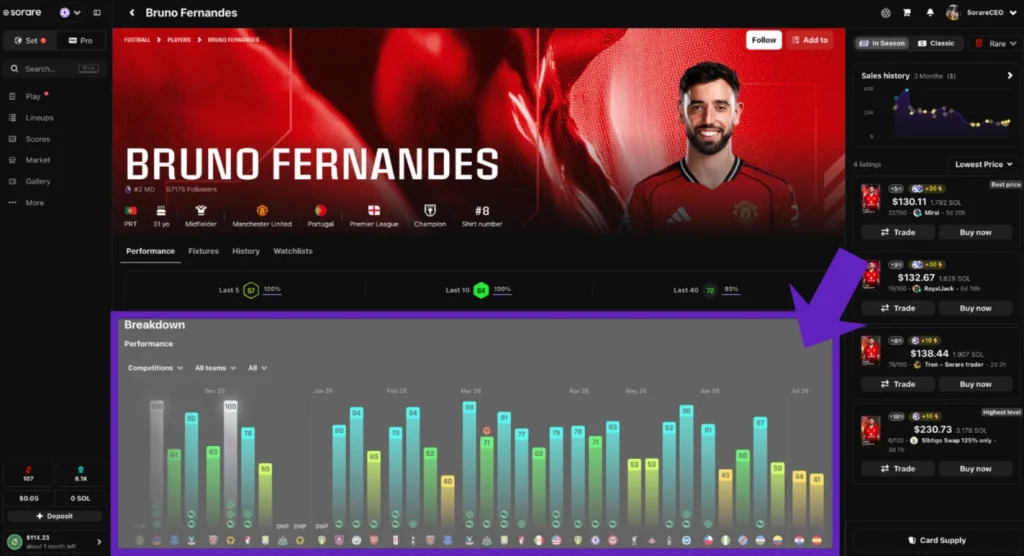
Sometimes Sorare makes you learn about leagues you previously knew almost nothing about. I’ve followed players from clubs I probably wouldn’t have watched otherwise.
You don’t need to become a professional scout. You simply want enough information to make better decisions than clicking on a familiar name.
Buy and sell cards
If you decide to use collectible cards, you can also buy and sell them through Sorare’s marketplace and trading system.
You might buy a player because you need his position for your lineups. You might sell another because you no longer use him. Sometimes your entire reason is simply that you want a different card.
Prices aren’t fixed forever. They can move as demand, player situations, and the game itself change.
This means buying a card deserves some thought. I never assume that I can purchase someone today and automatically recover the same amount later. Player cards can gain value, but they can lose value too (and that happens frequently).
And you don’t need to trade constantly. Sorare can become a deep marketplace game if you want it to… or trading can simply be a tool you occasionally use to improve your club.
That flexibility is a big part of what Sorare is in practice. You can compete, collect, scout, trade, or mix all four depending on what you enjoy most.
Do You Need to Spend Money to Play Sorare?

No. You don’t need to spend money to start playing Sorare. This is worth making clear because many people still assume Sorare requires you to buy cards immediately.
You can create an account, receive free cards, build lineups, and learn how the game works without putting money into your club.
That makes the free route a good starting point if you’re still figuring out what the game is all about. You can actually play before deciding whether the collectible side interests you.
Playing Sorare for free
Sorare has a dedicated free game called the Arcade built around cards you receive and collect through gameplay. You don’t need to purchase these cards from other managers.
Join Sorare with code SORARECEO to get free $150 for your first cards.
SORARECEO
COPY
SorareCEO.com is a certified affiliate partner of Sorare. This is an exclusive bonus for my readers.
You can build your collection by playing, completing objectives, opening packs, and earning resources used within the free game.
This isn’t just a short tutorial that ends after a few matches. You can continue developing your free collection and playing without moving into paid cards.
I think this matters for new managers. When I joined in 2022, Sorare had a much stronger learning curve around collectible cards. Today, you can spend much more time understanding the game before risking any money.
What changes when you buy cards?
Buying collectible cards opens another part of Sorare.
Instead of relying only on the free collection you build through gameplay, you can choose specific footballers from the marketplace and use eligible cards in competitions built around collectible ownership.
This gives you more control over your squad. Need a goalkeeper? You can search for one. Want to build around a specific league or club? You can target those players directly.
You can also sell collectible cards later. Their prices can rise or fall, so buying a card should never be treated like depositing money into a savings account.
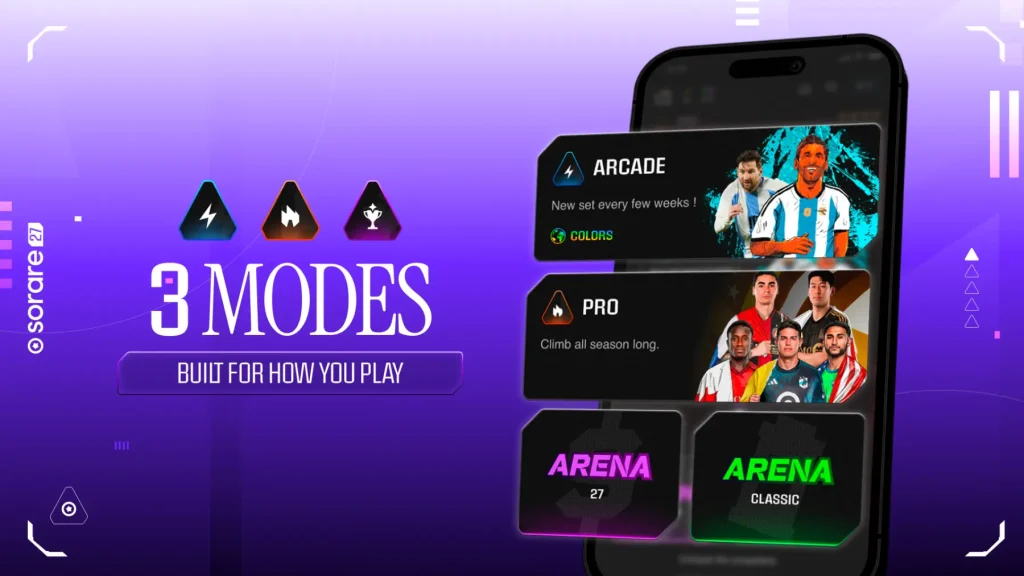
The paid side generally gives you more freedom over squad construction. It also introduces financial decisions that simply don’t exist when you’re playing for free.
Do beginners need a big budget?
Definitely not.
If you’re completely new, I’d actually avoid thinking about a “Sorare budget” until you understand what you enjoy playing.
Learn the interface. Build some free lineups. Follow your scores. See whether you enjoy scouting players and checking fixtures.
Only then does spending money become a useful question.
If you eventually decide to buy cards, you don’t need to copy managers with huge galleries. Sorare clubs can operate at very different budget levels, and spending more doesn’t automatically make your decisions better.
I learned that lesson myself. A cheap regular starter can be far more useful than an expensive name who doesn’t fit what I’m trying to build.
Start with the game first. Money can come later (or never). You can understand what Sorare is and enjoy its basic gameplay without paying for a collection.
Can You Win Real Money on Sorare?

Yes, you can win real money on Sorare. Cash is one of several reward types available across the platform, although exactly what you can earn depends on the competition you play.
This is also where I think expectations matter. Sorare has real rewards, but that doesn’t mean every lineup earns money or that playing should be treated as a reliable source of income.
Cash rewards
Some Sorare competitions offer cash rewards for successful lineups. Depending on the format, you may need to reach a scoring target or finish high enough amongst other players.
I’ve won cash countless times through Sorare myself, and it definitely makes watching your lineup more interesting. One late goal can suddenly mean much more than three fantasy points and a green arrow.
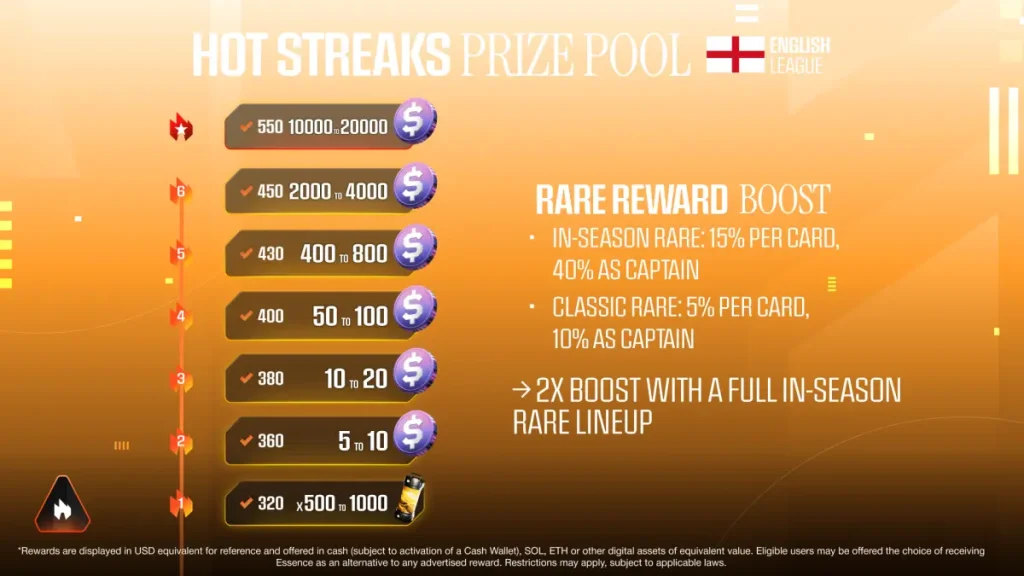
Still, rewards aren’t guaranteed. Your players need to perform, and football has a habit of destroying carefully planned lineups in ways you never considered on Friday.
Card and other rewards
Money isn’t the only thing you can earn.
Sorare also uses rewards such as player cards, Essence (in-game currency), and other resources connected with its different game modes. What you receive depends on where and how you play.
These rewards can help you continue building your club. A new card might strengthen a weak position, while another resource could help you progress elsewhere on the platform.
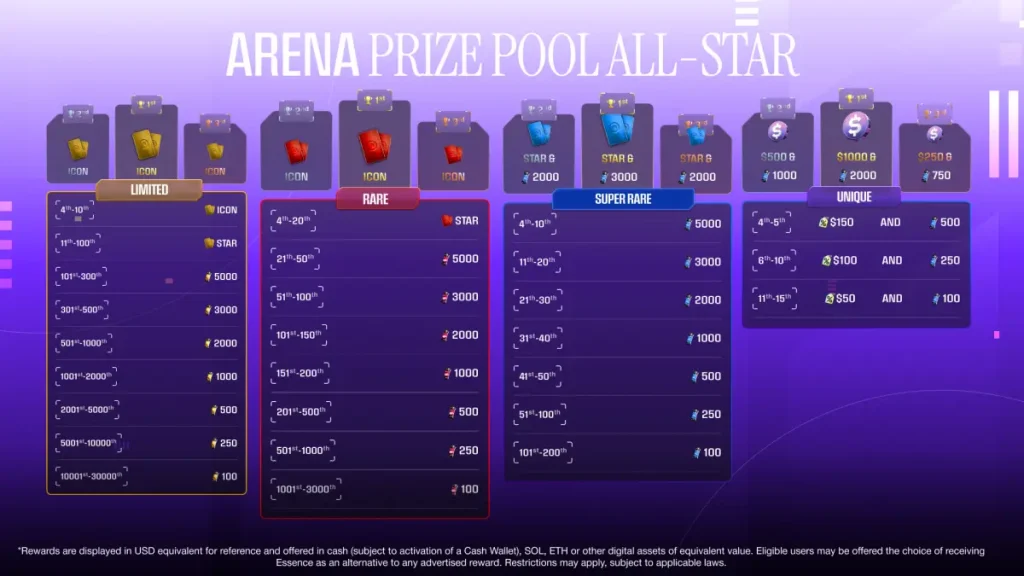
I wouldn’t judge every reward purely by its cash value either. Sometimes the most useful reward is simply something that gives you another strong lineup option (or just a lot of joy 🙂 )
Trading cards
Collectible Sorare cards can also be sold. If another manager wants a card you own, you may be able to turn that card into money through the marketplace.
For example, you might buy a young player before he becomes a regular starter and later find that demand for his card has increased. The opposite can happen just as easily, so be careful.
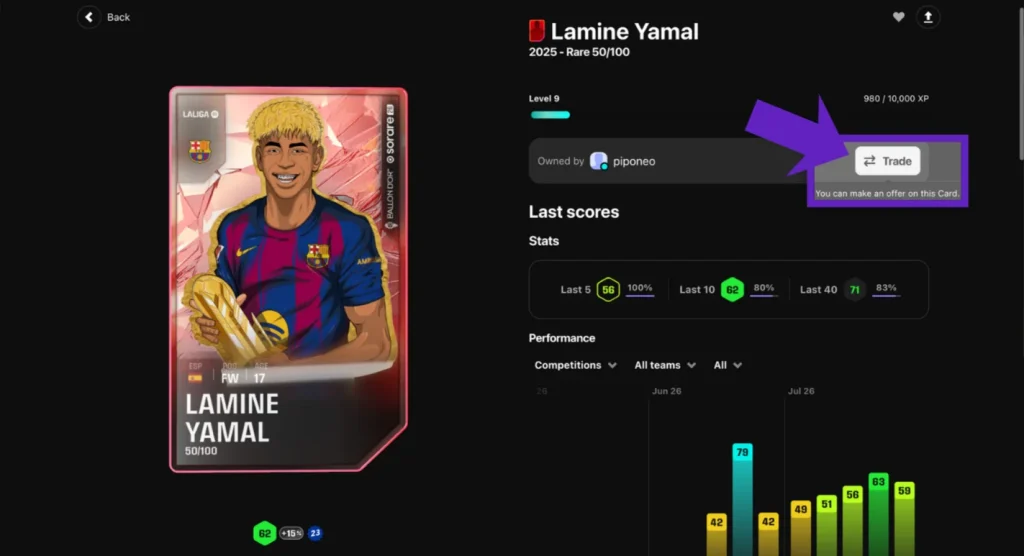
I’ve experienced both sides since 2022. Some cards became worth considerably more than I paid. Others went in exactly the wrong direction… football doesn’t care about your purchase price.
Buying and selling can therefore produce a profit or a loss. Card values depend on the player, demand, supply, utility in the game, and many other factors.
Sorare isn’t guaranteed income
This distinction is important when explaining the concepts of the game. It is a fantasy sports and collecting platform with real rewards, not a machine that generates predictable returns.
A footballer can get injured tomorrow. He can lose his starting place, transfer somewhere unexpected, retire, or simply start playing badly. Sorare competitions and card demand can change too.
You also compete against other managers who are trying to make good decisions themselves. There is no reason to assume that spending $100 will eventually return $120.
I prefer to approach Sorare as a football game first. I build lineups, scout players, manage my collection, and try to win rewards along the way.
If those rewards include cash, great. Just don’t confuse the possibility of winning money with a promise that you will.
Is Sorare an NFT or Crypto Game?

Technically, yes. Sorare uses blockchain technology, and its collectible player cards are NFTs. But calling Sorare an “NFT game” doesn’t explain very well what playing it actually feels like.
I rarely think about NFTs when I’m building a lineup. I’m thinking about whether my striker will start, whether my goalkeeper has a decent matchup, and whether somebody is about to get rotated.
Blockchain mostly works underneath that experience. You can play Sorare without understanding how a blockchain works… and you definitely don’t need to become a crypto expert first.
The Sorare <> blockchain relation
Blockchain technology mainly supports ownership of Sorare’s collectible cards. It provides a record showing that a specific card exists, how scarce it is, and who owns it.
This is why the NFT part matters when answering the question of “what is Sorare”. Sorare doesn’t use blockchain to simulate football matches or calculate whether your striker scored.
It uses it to support the digital ownership behind the collectible part of the game.
In 2026, Sorare cards operate on Solana, while ETH transactions use Base. Sorare also supports SOL alongside ETH within its payment system.
Real ownership of Sorare cards
This is the main reason blockchain exists within Sorare in the first place.
When you acquire a collectible Sorare card, that card belongs to you rather than functioning only as a temporary item assigned to your account. Sorare describes its cards as having verifiable ownership and limited supply.
You can keep an eligible card, use it in Sorare, sell it, trade it, or transfer supported cards outside the platform.
That distinction separates collectible Sorare cards from normal fantasy football players. If you select a player in FPL, you haven’t bought a digital collectible representing him. You have simply added that player to your fantasy squad within the game.
With Sorare, the collectible card remains yours until you decide to move or sell it.
So yes, NFTs and crypto are part of the answer to what Sorare is. They just don’t need to dominate your experience. For most managers, football remains the part they interact with every day.
What Happens to Your Cards Over Time?

One of the first things I wondered after buying cards was what would happen to them next season. Do they expire? Does a transfer make them useless? What about retirement?
The simple answer is that your collectible Sorare cards remain yours. A new season doesn’t delete them from your gallery. What can change over time is how useful they are for fantasy competitions.
No expiration date
Collectible Sorare cards don’t have an expiration date that suddenly removes them from your account.
A card you bought several seasons ago can remain in your collection today. You can keep it as a collectible, sell it, trade it, or use it when that card remains eligible for a competition.
This is an important distinction when understanding how Sorare works. You aren’t renting a player for one fantasy season. The collectible itself stays with you.
That doesn’t mean every card will remain equally useful forever. Sorare can change competition rules, while the footballer’s career can obviously change too.
Transition from In-Season into Classic cards
A current season card starts as In-Season. Before the next league season begins, it eventually loses that status and becomes a Classic card.
The card doesn’t disappear. You don’t need to exchange it for a new version either. It simply moves into the older card category for competition purposes.
I own plenty of older cards myself because I love the Classic competitions, so this distinction matters a lot to how I build my club. A card becoming Classic isn’t the same thing as that card becoming useless.
What happens when a player transfers?
Your card follows the player, not the club printed on the card.
Imagine you own a card showing a midfielder in his old club shirt. He transfers during the summer and starts playing somewhere else. You still own the same card, and it still represents that footballer.
You don’t receive a replacement card with his new club automatically. New cards may later be issued showing him at the new team.
For fantasy scoring, the important question becomes whether Sorare continues to cover his real matches and whether your card remains eligible for the competition you want to enter.
If he transfers to another covered league, the change can be relatively straightforward. A move outside Sorare’s scoring coverage can seriously reduce the card’s immediate fantasy utility.
The club printed on the card can still matter elsewhere. For example, Sorare’s Collection Game associates a card with the club and season shown on that particular card.
This is why transfers can create some interesting situations. Two cards of the same footballer can show different clubs while both continue representing that player.
What happens when a player retires?
Retirement is the less pleasant version of the same idea.
If a footballer retires, the Sorare card doesn’t vanish from your collection. You still own the collectible.
The problem is obvious… there are no new professional matches from which that player can generate fantasy scores.
That normally removes the main gameplay utility that made the card useful in the first place. It may still have value to a collector, but you shouldn’t assume a retired player’s card will retain its previous market value.
I’ve learned to think about Sorare cards in two separate ways:
- ownership can continue indefinitely…
- …but while fantasy utility can change.
A transfer, retirement, new season, injury, or competition change can affect how useful a card is without changing the fact that you still own it.
And that long term ownership is one of the biggest differences between Sorare and normal fantasy football… which makes FPL a useful comparison next.
Different Sports on Sorare

Although football is the biggest part of Sorare for many managers (and definitely for me 🙂 ), the platform also covers basketball and baseball.
In 2026, Sorare has three main sports: Sorare Football, Sorare NBA, and Sorare MLB. Each uses the same broad idea of collecting players and turning real performances into fantasy results.
The actual games aren’t identical, though. Each sport has its own cards, scoring system, lineup rules, competitions, and strategy.
Football
Sorare started with football, and this is the part of the platform I’ve exclusively focused on since joining in 2022.
It covers clubs and competitions from many countries rather than limiting you to one domestic league. That opens the door to very different ways of building a club.
You might know the Premier League inside out and start there. Later, you could find yourself scouting a goalkeeper in Belgium or checking lineups from the Korean league before breakfast (Sorare does strange things to your football habits).
Football is also the sport I’m referring to throughout most of this guide when explaining what Sorare is and how its basic gameplay works.
NBA
Sorare NBA applies the fantasy card concept to basketball using officially licensed NBA players.
You build lineups with NBA player cards and earn fantasy scores from what those players do in real games. Basketball obviously requires a different scoring system and strategy than football.
Your football collection doesn’t suddenly become an NBA collection either. Think of Sorare NBA as its own game living within the wider Sorare platform.
MLB
Sorare MLB does the same for Major League Baseball.
You collect MLB player cards, create fantasy lineups, and follow real baseball performances to see how your selections score.
Again, the structure is designed around the sport itself. Baseball statistics, positions, schedules, and lineup decisions create a very different game from Sorare Football.
You don’t need to play all three sports (I know I don’t 🙂 )
If football is your thing, you can stay entirely within Sorare Football. If you also follow basketball or baseball, Sorare gives you another game to explore without requiring a separate account.
So when somebody asks me the question “what is Sorare” – “fantasy football” is no longer the complete answer. It is a multi sport fantasy and collecting platform, even if football remains the reason many of us joined.
Who Is Sorare Actually For?

Sorare isn’t only for one type of football fan. That’s partly because you can approach the platform from several directions.
You can care about fantasy competitions, collecting, scouting, trading, or all of them at once. For me, that mixture is a big reason I’ve stayed since 2022.
Still, Sorare won’t suit everybody. If you’re wondering whether to join, these are the people I think will get the most from it.
Fantasy football players
If you already enjoy Fantasy Premier League or another fantasy football game, Sorare should feel familiar enough to get started.
You still make decisions based on fixtures, expected minutes, form, injuries, and player roles. The difference is that your available cards become another part of the puzzle.
I think Sorare particularly suits fantasy players who want something deeper than selecting a new squad from the same player pool every season.
Football fans
You don’t need years of fantasy experience. Simply following football closely can give you a useful starting point.
Knowing that a striker has lost his place or a young midfielder has become a regular starter can suddenly become useful information.
Sorare also gives you reasons to follow matches outside your normal routine. I’ve watched plenty of games I would never have opened before joining… all because one of my players was involved.
Football card collectors
If you already enjoy football cards, stickers, shirts, or other memorabilia, the collecting side may appeal to you even before the fantasy game does.
You can build collections around players, clubs, seasons, scarcities, or particular card editions.
The difference is utility. Your Sorare card isn’t necessarily something you only look at. Eligible cards can also become part of your fantasy lineups.
People who enjoy scouting and squad building
This is probably where Sorare gets dangerous for my free time.
If you enjoy finding players before everybody starts talking about them, researching transfers, or building squads around specific competitions, there is plenty to dig into.
You might spend ten minutes looking for a striker and somehow end up researching a 21 year old full back you’ve never heard of. I’ve been there many times.
You don’t need to know every league. In fact, learning about unfamiliar players is part of the fun.
Who probably won’t enjoy Sorare?
Sorare may not be a great fit if you want a completely passive football game.
Players get injured. Starting lineups change. Transfers happen. Competition rules matter. If you use collectible cards, their market values can also move.
You don’t need to spend hours every day researching football, but paying some attention usually improves the experience.
I also wouldn’t recommend Sorare to somebody whose only goal is making easy money. If that’s your reason for joining, the football side will probably start feeling like work very quickly.
But if you enjoy football decisions, fantasy games, collecting, or squad building, Sorare combines those interests in a way I haven’t really found elsewhere.
And that leads to the more personal question: after playing since 2022, do I still think Sorare is actually worth your time?
Is Sorare Worth Playing?

For me, yes. I’ve played Sorare for a while now, and I wouldn’t still be managing lineups years later if I didn’t enjoy the core game.
But I also wouldn’t tell you that Sorare is perfect. It has changed a lot since I joined, and some changes have worked better for me than others.
If you’re researching “what is Sorare” before creating an account, I think the best approach is to look at both sides.
What I still enjoy after years of playing
The biggest reason I still play is simple: Sorare makes me care about more football.
I can watch a match between two clubs I don’t support and still have a reason to follow every minute. One goalkeeper, defender, or midfielder in my lineup is often enough.
I also enjoy building a club rather than starting from zero every few months. My decisions connect with each other over time, which makes squad building more satisfying for me.
Then there is scouting. Finding a useful player before his situation becomes obvious remains one of my favorite parts of the game.
Sometimes that means spotting a backup who is about to become a starter. Other times, it’s finding a reliable player from a league most managers aren’t currently watching.
And yes… getting a big score from someone you researched yourself feels much better than simply picking the most popular name.
What I don’t like about Sorare
The biggest downside is probably change.
Sorare has redesigned competitions, rewards, card utility, and other parts of the game several times since I joined. You can build a strategy around one system and later need to rethink it.
That can be frustrating when you own collectible cards. A rule change doesn’t remove your ownership, but it can affect how useful certain cards are for the way you play.
Sorare also has a learning curve. The basic gameplay loop is easy, but card eligibility, bonuses, competition rules, scoring, and the marketplace add more layers.
You don’t need to learn everything on day one. Trying to do that is probably the fastest way to turn a football game into homework.
And then there is football itself. You can research a lineup for an hour and still watch your captain get injured after twelve minutes. Sorare can’t fix that one.
For more detailed takes on the current state of the game, read my Sorare review article.
What should new players realistically expect
Don’t expect to create an account today and understand every corner of Sorare tomorrow.
Start small. Learn why players score well. Build lineups. Follow a few matches and see whether the basic loop actually keeps you interested.
You can do that without spending money, which makes the decision much easier in 2026. There is little reason to rush into buying collectible cards before you know what you want from the game.
If you later spend money, treat it as money you are putting into a hobby with variable card values. Don’t build your expectations around guaranteed profit.
I would also avoid comparing your club with managers who have been collecting cards for years. I’ve been here since 2022, so naturally my gallery looks very different from a new account.
Your first goal doesn’t need to be winning thousands of dollars or building hundreds of cards. It should be understanding the game and finding the part of Sorare you enjoy.
To sum up: I think Sorare is worth playing if you enjoy fantasy football, scouting, collecting, or long term squad building. The free game also makes trying it much easier than it used to be. If none of those things sound interesting, Sorare probably won’t change your mind. But if you’ve reached this far into a guide about what is Sorare… I’m guessing at least one of them already does.
Frequently Asked Questions

We’ve covered most parts of what Sorare is in detail already. To finish the explanation, here are quick answers to questions I regularly see from new managers.
Yes. You can create a Sorare account and play without spending money. Sorare has free gameplay where you can collect cards, build lineups, and progress without purchasing collectible cards.
You can move into the collectible side later if you want more control over the players you own and the competitions you enter.
Yes. Sorare is a real fantasy sports company founded in Paris in 2018. It works with major sports organizations, leagues, clubs, and players through official licensing agreements.
I’ve personally used Sorare since 2022. I’ve built lineups, bought and sold cards, and received rewards through the platform during that time.
Sorare doesn’t work like a traditional sportsbook where you place a bet on a match result at fixed odds.
You build fantasy lineups using player cards, and real performances determine their scores. Skill, football knowledge, and lineup decisions therefore play a direct role.
However, collectible cards can cost real money and their values can fall. Laws and classifications can also differ between countries, so you should check the rules where you live if this distinction matters to you.
Yes, it is possible to earn money through cash rewards or by selling collectible cards for more than you paid.
Neither is guaranteed. You can also lose money on cards, miss rewards, or make terrible transfers (I’ve completed that particular tutorial myself).
I would treat Sorare as a fantasy football and collecting game first, not as a predictable income source.
Yes. Collectible Sorare cards can be sold to other managers through Sorare’s marketplace and trading features.
The amount another manager is willing to pay can change over time. Player performance, demand, card utility, injuries, transfers, and many other factors can influence prices.
No. Your collectible Pro cards don’t disappear simply because a football season finishes.
Older cards can move from In-Season to Classic status, and their competition utility can change. You still keep the underlying collectible unless you sell or transfer it.
The only types of cards that kind of expire are free-to-play Common cards in the Arcade game.
Yes. You don’t need to buy cryptocurrency before playing Sorare, and you don’t need previous blockchain experience.
You can start with the free game. Regular payment methods are also available if you later decide to buy collectible cards.
The basic game isn’t difficult. Collect players, build a lineup, and let their real performances generate your fantasy scores.
The complexity appears later. Scoring details, competition eligibility, card types, bonuses, scouting, and the marketplace can take some time to understand.
My advice is not to learn everything at once. Understand what is Sorare first, play a few lineups, and learn the deeper mechanics when you actually need them.
That is exactly what we’re going to do next. If Sorare sounds like your type of game, I’ll show you where to start without throwing the entire rulebook at you.
Start Playing Sorare

If you’ve reached this point, you now know precisely what Sorare is, how the basic gameplay works, and what makes it different from traditional fantasy football.
The next step is simply creating an account and learning the platform by actually using it. You don’t need to buy a card first, prepare a budget, or understand every Sorare rule before you begin.
I’d start with the free game. Build your first collection, submit a few lineups, and watch how your players score during real matches. That experience will teach you more than reading another twenty definitions.
Once the basics feel familiar, you can decide how far you want to go. Maybe you’ll stay with free gameplay. Maybe you’ll start collecting cards, enter Pro competitions, or discover that scouting obscure goalkeepers is somehow your new Sunday hobby.
Just don’t rush.
When I joined in 2022, I had to learn plenty through trial and error. Sorare has changed since then, but one piece of advice still holds up: understand what you’re buying and why you need it before spending money.
If you’re ready to move from asking the question “what is Sorare?” to actually playing it, my complete Sorare Beginner’s Guide is the next place I’d go.
Join Sorare with code SORARECEO to get free $150 for your first cards.
SORARECEO
COPY
SorareCEO.com is a certified affiliate partner of Sorare. This is an exclusive bonus for my readers.
There I explain the platform step by step, including account setup, game modes, scoring, lineup creation, substitutions, bonuses, card scarcities, and buying or selling players.
This guide answered the big question. The Beginner’s Guide shows you what to do next 🙂