


If you’re wondering what is Sorare and why so many people love playing it so much, you’re in the right place. In this guide, I’ll walk you through what the game actually is, how it works, and what makes it different from any other fantasy football experience you’ve tried before.
You’ll get a clear look at how Sorare blends fantasy sports with digital ownership, how cards work, how competitions are structured, and what you can actually do with your team. We’ll also touch on rewards, strategies, and the kind of decisions you’ll face once you start playing.
By the end, you’ll know exactly how Sorare operates… and whether it’s a game worth your time (and possibly your money).
💡 What is Sorare?
In short, Sorare is a fantasy sports platform that allows you to:
- Collect officially licensed digital player cards that you truly own and can use for lifetime in order to win weekly rewards like cash, cards, and real life experiences.
- Build lineups and enter competitions across football, NBA, and MLB.
- Score points based on real-world player performances.
- Play free or invest in cards for bigger contests and prizes.
SIGN-UP OFFER
Register at Sorare using this sign-up offer and get free $150 to spend on cards.
Introduction to Sorare

Sorare began in 2018, created by Nicolas Julia and Adrien Montfort. At the time, fantasy sports was already really popular globally. But it was stuck in the same seasonal loop, meaning you draft your team, play for a few months, and start over the next season.
Julia and Montfort saw an opportunity to change that. They wanted to give managers the freedom to actually own their fantasy players and keep them from year to year. To do that, they launched officially licensed digital cards of real-world footballers.
These cards aren’t just pictures on a website since each one is a unique token stored on the Ethereum blockchain, meaning it’s fully verifiable and tradable. In other words, when you buy a card, it’s yours in the same way a signed shirt or a physical trading card is yours. You can hold it, sell it, or trade it whenever you want, without the platform taking it away when the season ends.
This ownership model instantly set Sorare apart from other fantasy sports platforms and it’s what lured me to the game – and made me stay for good 🙂

In traditional fantasy sports, your players exist only inside that season’s game database. They can’t be traded outside the platform, and when the season is over, they disappear.
In Sorare, your cards have a life beyond the season. If a player moves clubs, gets better, or starts making headlines, the value of your card can change accordingly. The real-world performance of players drives both your fantasy points and the potential market value of your card collection.
Such game mechanism means that Sorare rewards both sports knowledge and smart market moves. You’re not just picking a lineup but you’re also managing a portfolio of cards. You have to think about things such as the form of players, upcoming fixtures, injuries, transfer rumors. This combination means you’re always balancing short-term performance with long-term potential, making the game as much about strategy as it is about luck or timing.
Sorare is a game where your decisions today could pay off months or even years later… if you make the right calls.
How does Sorare work?

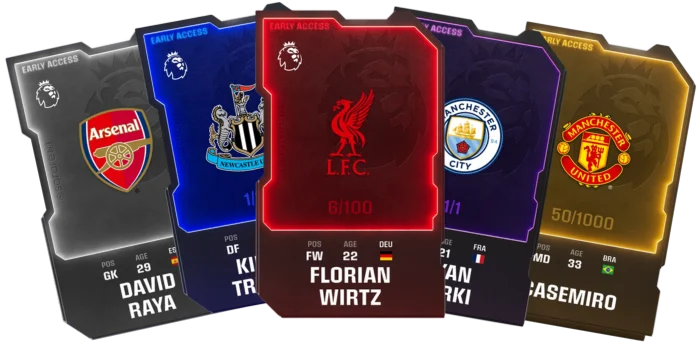
At its core, Sorare is a fantasy football game built on the concept of digital ownership. Each card has its own serial number and scarcity level, which directly influences its market value and potential demand among other managers.
💡 The authenticity of these cards comes from Sorare’s official licensing deals with clubs, leagues, and governing bodies around the world. These agreements mean that every card uses official player photos, team logos, and other verifiable data. You’ll find stars from the English Premier League, La Liga, Serie A, Bundesliga, Major League Soccer, and dozens of other competitions.
The licensing also keeps the game grounded in the real world, so you’re managing actual players whose performances you can follow every week.
To play the game, you assemble a team of your cards and enter them into weekly competitions. Each player scores points based on real-world performances: goals, assists, clean sheets, duels won, key passes, and many other in-game actions.
Sorare uses the most reliable data provider, Opta, to track and score these events, ensuring accuracy and transparency. Your goal is to build a lineup that scores as many points as possible to earn rewards such as new cards or huge cash payouts.
That combination of true digital ownership, official licensing, and performance-based gameplay is what gives Sorare its edge. It’s still fantasy sports at heart, but every decision you make carries lasting consequences (both in terms of competition results and the value of your collection).
Gameplay overview

To put it short: you build lineups, enter competitions, track scores, then convert results into rewards. That loop looks simple at first… but the details decide whether you win consistently or by occasional stroke of luck.
Building Your Team
The core gameplay of Sorare is divided into 2 modes:
- In-Season
- Classic
In-Season contests use five players: one goalkeeper, one defender, one midfielder, one forward, plus one extra outfielder.

Classic contests use seven, so you use one goalkeeper, two defenders, two midfielders, one forward, and one extra outfielder. More slots mean more risks and also the the need for a bigger card gallery.

In-Season entries require current season cards. Your lineup permits only one Classic card.
Classic lineups on the other hand can consist exclusively of cards from past seasons, so older purchases still matter as long as the player is active.
It’s important to note that only In-Season competitions pay out cash rewards. In Classic competitions, you can win In-Season cards that you can then submit in In-Season competitions if you want to avoid spending money every year.
Your card collection improves over time through targeted buying, smart trading and the cards you win.
My suggestion is to start out with players that are almost guaranteed to start games. Target cards with specialist roles like set piece takers, shot stoppers, or duel winning full backs. These are my favorite picks because they don’t always depend on Decisive Actions such as scoring goals or providing assists.
Competitions and scoring
There are two Gameweeks every week, which essentially means you can win twice a week. But the number of possible rewards will depend on how many lineups you submit. In my case – over 3 years after joining the platform – I’m able to submit close to 10 lineups weekly.
Each Gameweek runs on a fixed window. The midweek Gameweeks start on Tuesdays and end on Fridays, while the weekend Gameweeks open on Fridays and close on Tuesdays. You submit your lineups the before lock, then every real action turns into points. Goals, assists, clean sheets, saves, key passes, tackles, interceptions, duels won… small events compound into winning totals.
SIGN-UP OFFER
Register at Sorare using this sign-up offer and get free $150 to spend on cards.
Apart from base scoring, card bonuses also play a role on tight leaderboards. Cards gain XP (experience) bonuses with use, which adds a percentage boost. Current season cards receive an extra bonus too. Finally, you also get rewarded with an extra % boost if you build collections of cards from single teams.
You also select a captain. A good captain decision often decides whether you win or not since the captain score is boosted by additional 50%. I’ve seen my lineups die because of a poor captain choice on countless occasions.
Reward Types
Finish high enough on the leaderboard and you claim rewards.
- You can receive cash credited to your wallet if you play In-Season competitions
- You can win new cards to strengthen lineups or become trade assets if you focus on Classic tournaments
- Both In-Season and Classic competitions also reward Essence (Sorare’s in-game currency) with which you can craft new cards
- Physical prizes exist too, including jerseys and occasional VIP experiences that link gameplay to real-life stadium moments
💡 PRO TIP: If you’re interested in a detailed analysis of the game mechanics and a newbie-friendly tutorial, read my Sorare beginner’s guide. I already updated it for the upcoming season of Sorare 26.
Think of rewards in two ways. Immediate liquidity from cash helps you reinvest fast. Cards and Essence grow long term power, letting you enter stronger contests more often. The best approach blends both… secure stable returns while compounding gallery quality over time.
Game economy

If someone asks me what is Sorare, I say the game’s economy is where the game becomes real value.
Marketplace mechanics
The marketplace has two flows – primary market from Sorare and secondary listings from managers.
Primary market is divided into:
- Auctions – you bid until the clock hits zero, highest bid wins…
- Instant Buys – you buy your desired card with one click. No wait, no bidding drama, but a higher price
Secondary listings have prices set by other managers. They also allow for private offers. You can post a card at a fixed price, wait for a buyer, or accept negotiated offers. Private offers enable two-way deals or even multi-card swaps if both sides agree.
You can make purchases with a debit/credit card, Paypal, Apple Pay, or a crypto wallet.
Rarity tiers
| Scarcity | Best for | Budget |
|---|---|---|
| ⚪ Common | Learning the basics, free entry | Free |
| 🟡 Limited | New managers, casual gameplay | Low ($10–$100 to build a team) |
| 🔴 Rare | Core gameplay, better rewards | Mid ($10–$500+ per player) |
| 🔵 Super Rare | Advanced users | High |
| ⚫ Unique | Elite players, collectors, whales | Very High |
Each rarity releases different number of cards per season.
- Common – free and unlimited. Training and entry paths. No resale value
- Limited – 1,000 per season
- Rare – 100 per season
- Super Rare – 10 per season
- Unique – 1 per season
Scarcity influences contest access and prices and card utility drives demand. A nailed-on ninety minute starter in Rare can outprice a rotation forward in Super Rare… utility first, scarcity second, hype last!
Profit potential
Sorare differs from traditional fantasy because cards persist. Your gallery compounds utility and value over time, not just one season. You decide when to buy, when to sell, and when to hold for rewards or liquidity.

When it comes to profiting from the game, there are two common paths – yielding from rewards and successful trading.
- Rewards equal new cards that you can sell (Classic competitions), cash (In-Season competitions), or Essence (both Classic and In-Season) with which you can craft new cards and then list them on the market
- Trading finds mispriced players and sells them for profit in time
Multi-sport expansion

Sorare started with football, but it didn’t stay there. The platform expanded into other major sports, adding the NBA in 2022 and MLB shortly after.
Sorare NBA
The NBA format follows similar principles to football but adapts to basketball’s pace and stat-heavy nature.
You build lineups based on salary caps, balancing star players with role players who can outperform their cost. Points are awarded for common basketball stats such as points, rebounds, assists, steals, and blocks, with efficiency metrics baked into the scoring system.
The gameplay rhythm changes, as NBA contests run more frequently during the week, and roster management demands quick reaction to injuries, rotations, and back-to-back schedules.
Sorare MLB
MLB brings a different dynamic entirely.
Baseball’s long season and daily game structure mean contests are frequent, and lineups can be adjusted often. Scoring accounts for hits, runs, home runs, RBIs, strikeouts, and pitching performance.
The nature of baseball statistics (with huge swings from day to day) means variance plays a larger role, and spotting streaks early can be a real edge.
What’s important is that both NBA and MLB share the same Sorare account and wallet system. Your marketplace balance and transaction history are universal. You can trade across sports, reinvesting football profits into basketball cards, or diversify into baseball during football’s off-season. The cross-sport ecosystem keeps your engagement high year-round and opens opportunities you wouldn’t have in single-sport fantasy.
More sports = bigger reach
Multi-sport expansion also widened Sorare’s reach.
Football already had a global audience, but NBA brought in a massive US-based user base and strengthened appeal in Asia, where basketball is huge. MLB tapped into North American and Japanese markets, adding diversity to the community and expanding the trading pool for all sports.
More users across sports means deeper liquidity in the marketplace. It also attracts more licensing deals, as leagues see Sorare as a multi-sport platform with a proven global audience. This reinforces card value because the ecosystem’s growth fuels demand not just for football cards but for all sports on the platform.
Is Sorare for you?

As you probably know by now, Sorare isn’t just another fantasy sports platform. It’s a hybrid model that merges collectible ownership with active gameplay, creating a space where your time and strategy can translate into lasting value.
This blend changes the rules compared to traditional fantasy sports, where everything resets at the end of the season and your assets disappear. Here, your cards persist, your gallery grows, and your knowledge compounds over time.
With that said, it’s not a game for everyone. The current format of Sorare appeals to three main groups, each for different reasons:
- Collectors — People who value scarcity, official licensing, and the long-term appeal of owning unique sports memorabilia in digital form
- Fantasy fans — Players who love the strategic side of fantasy sports and want a game that rewards them beyond just a single season’s leaderboard
- NFT enthusiasts — Users who understand blockchain assets, want real utility for their NFTs, and prefer platforms with transparent, verifiable assets
These groups often overlap. A fantasy football manager may become a collector once they hold a rare card of a favorite player (I’m a living example of this!), while an NFT trader might get hooked on the competition side after entering a few lineups.
Sorare’s design allows different entry points but keeps users engaged by connecting their interests… whether that’s competition, collecting, or investing.
Getting started

Getting into Sorare is easier than it might seem at first glance. You don’t need to be a blockchain expert or a fantasy sports veteran to begin since the platform is built to give you a smooth start whether you want to play casually or commit seriously from day one.
💡 PRO TIP: If you’re thinking about joining the platform, do so with the help of my Sorare sign-up bonus. This way you will have a head start over other new managers!
Quick launch
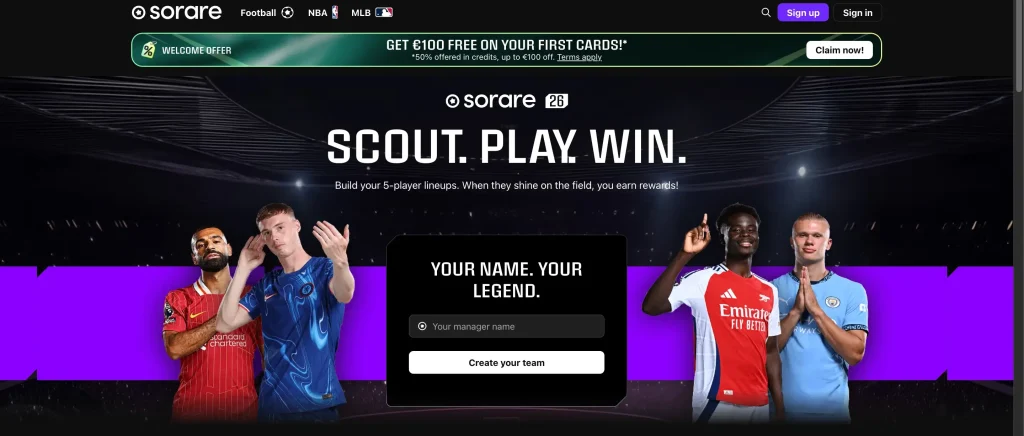
The first step is setting up your account. You register with an email address, Gmail account, or Apple ID, and confirm your details.
Then you can make your first deposit using a debit/credit card, Paypal, or Apple Pay in order to have funds to buy your first cards.
If you want to test the game in the free-to-play mode, you can skip this step. New users get access to a free onboarding process where you select your favorite leagues. Based on your picks, Sorare gives you a set of free Common cards. These have no monetary value but allow you to compete in beginner-friendly competitions right away.
Alongside your starter pack, you’ll find tools to help you navigate the game. The lineup builder walks you through contest entry, showing position slots and eligible cards. Player pages give you detailed performance stats and recent scores.
Entry points: Free-to-Play vs. Sorare Pro
From here, you choose your path. If you want to play for free, you can stick with Common cards, enter the dedicated competitions, and learn the scoring and contest formats without spending money. This approach is perfect if you’re still figuring out whether Sorare is the right game for you.
If you want to step into the main economy (Sorare Pro), your first purchase will usually be a Limited card because it’s the most affordable scarcity tier. Limited cards open the door to paid competitions with bigger prize pools, including other Limited cards, cash, and Essence.
As you move up, you might target Rare cards for higher-tier contests and better rewards.
SIGN-UP OFFER
Register at Sorare using this sign-up offer and get free $150 to spend on cards.
Some managers blend both approaches by playing free-to-play competitions while slowly building a paid card gallery. This hybrid path lets you learn the game, minimize early mistakes, and still take part in contests that can return real value.
Whichever route you take, the key is to start small, get familiar with the Gameweek rhythm, and learn how cards gain or lose value over time. Once you’ve got a handle on those basics, you can expand your gallery, refine your strategy, and target the competitions that best fit your goals.
If lately you’ve been asking yourself the question what is Sorare, I hope that my article has delivered a clear-enough explanation. However, should you have additional questions and doubts, you can send me an email and I’ll gladly help you out with making your first steps on the platform. Alternatively, you can read my review of Sorare for further clues.