

DNPs (in other words: Did Not Play) have ruined more of my Sorare lineups than I can remember. You research the fixtures, build a lineup you like, and then one player never leaves the bench or is not even on it. Zero points… weekend ruined (or at least heavily damaged 🙂 ).
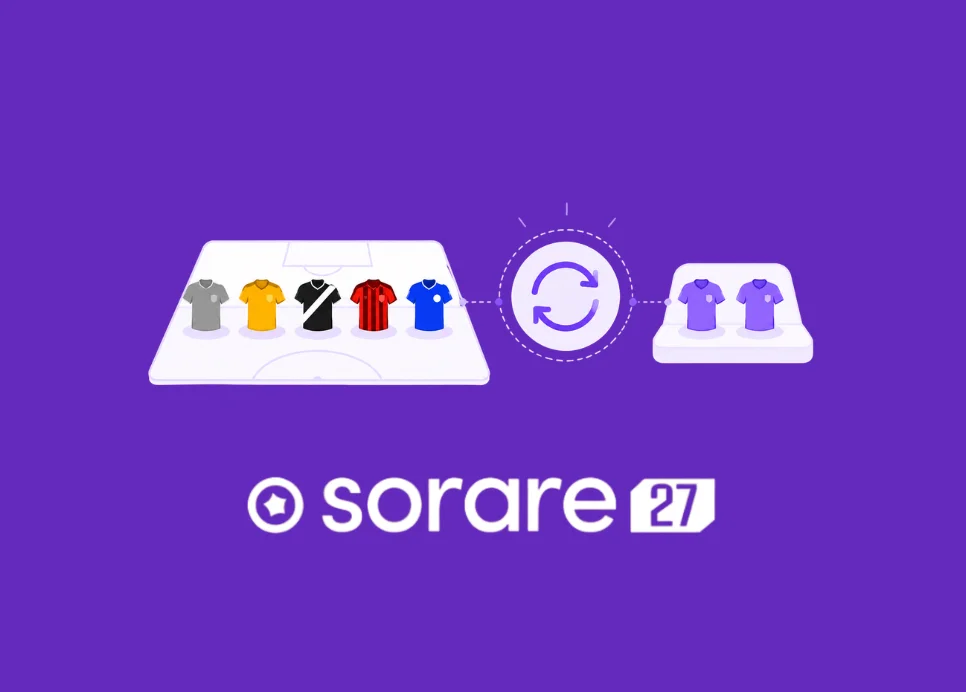
For Sorare 27, the game has finally introduced substitutions to help deal with that problem. Managers like me and you can add optional substitute cards when building eligible Arena lineups. If one of your starters gets a DNP, an eligible substitute can automatically take his place.
That sounds simple, but there is quite a bit of strategy behind it. In this guide, I’ll explain exactly how Sorare substitutions work, how many substitutes you can select, which cards can replace each player, and what happens when a substitution is triggered.
More importantly, we’ll look at strategy. A substitute slot is only useful if you fill it properly… and there are several ways to get that decision wrong.

TL;DR: Quick Summary
If you have enough time, I encourage you read the whole article for all the details to understand the topic even better.
- Substitutions protect eligible Arena lineups against DNPs by automatically replacing players who don’t play.
- You can select up to two substitutes: one goalkeeper and one outfield player.
- Position and competition rules still apply, although the Extra position gives your outfield substitute more flexibility.
- Substitutes cannot replace players who already played, even if they produced a poor Sorare score.
- The best strategy is to use substitutes as DNP insurance, prioritizing reliable starters who cover your lineup’s biggest risks.
Join Sorare with code SORARECEO to get free $150 for your first cards.
SORARECEO
COPY
SorareCEO.com is a certified affiliate partner of Sorare. This is an exclusive bonus for my readers.
What Are Substitutions on Sorare?

Sorare substitutions are optional backup cards that can replace starters who record a DNP (Did Not Play). In simple terms, they give eligible lineups some protection when one of your selected players doesn’t play.
As announced in my updated Sorare tutorial, this is a new feature for Sorare 27. Before substitutions arrived, selecting a player who unexpectedly stayed on the bench usually meant accepting a zero from that lineup position.
I’ve lost plenty of promising lineups this way since joining the platform in 2022. Sometimes the player was expected to start. Sometimes there was late rotation. And sometimes football simply decided to ruin my plans five minutes before kickoff for the most random of reasons.
Substitutions give us another option, because now when you build a lineup, you can select substitute cards alongside your starting players. If it turns out that an eligible starter never enters the field, the appropriate substitute can step into the lineup instead.
However, this isn’t the same substitution system you see during a real football match. You don’t watch your striker score 35 points and manually replace him with somebody playing later. You also can’t remove a starter simply because you don’t like his score.
The system exists to cover DNPs, meaning players who did not play at all. Your substitutes act as backups rather than tactical replacements for players who have already appeared.
There are also rules controlling which substitute can replace which starter. Goalkeepers and outfield players are treated differently, while position and competition eligibility still matter.
So, adding two strong cards to the bench isn’t enough on its own. You need to understand exactly when Sorare can use them and which starting positions they can cover.
That’s what we’ll look at next.
How Do Subs Work?

Sorare substitutions work by giving your Arena lineup two backup options:
- one goalkeeper
- one outfield player
If an eligible starter finishes with a DNP, Sorare can replace that card with the appropriate substitute.
The important word here is “backup.” You select your substitutes when building the lineup, but you don’t manually activate them later because you dislike a starter’s score.
The replacement also needs to follow Sorare’s position rules. This is where goalkeeper, normal outfield, and Extra positions need to be treated separately.
Goalkeeper substitutions
Your goalkeeper substitute has one job. He can cover the goalkeeper position if your starting goalkeeper records a DNP.
You cannot use an outfield substitute as emergency goalkeeper cover. Likewise, the goalkeeper substitute cannot jump into DEF, MID, FWD, or Extra.
That makes the goalkeeper bench slot straightforward, but still valuable. Goalkeeper DNPs have always been painful because there is no other position in the lineup that can cover them.
If I’m uncertain whether my starting goalkeeper will play, having another eligible goalkeeper available gives me some protection against that zero.
Outfield player substitutions
The outfield substitute covers your DEF, MID, or FWD positions but there is an important restriction.
For a normal positional slot, the substitute must match the position of the player being replaced. So:
- a defender can replace a defender
- a midfielder can replace a midfielder
- a forward can replace a forward
If your starting defender gets a DNP but your selected outfield substitute is a midfielder, that midfielder cannot simply move into the DEF slot.
This makes your bench selection a strategic choice. One outfield substitute cannot automatically protect every player in your lineup.
For example, if two of my midfielders have uncertain minutes while every other starter looks safe, choosing a midfielder as my substitute makes much more sense than adding another forward just because I expect him to score well.
The Extra position
If you already know how Sorare works, by now you’re familiar with the Extra position that is included in all Sorare lineups.
This position gives you more flexibility, because a player occupying the Extra slot can be replaced by any eligible outfield substitute. The replacement doesn’t need to share the same DEF, MID, or FWD position as the original Extra player.
Imagine your Extra starter is a midfielder who gets a DNP. If your selected outfield substitute is an eligible defender, Sorare can still use that defender in the Extra position.
That flexibility makes Extra an interesting part of substitution strategy. It can give your single outfield substitute another possible route into the lineup.
Number of Allowed Substitutions

In eligible Sorare Arena competitions, you can select up to two substitutes for each lineup:
- one goalkeeper
- one outfield player
These are separate substitute slots. You cannot skip the goalkeeper substitute and select two outfield players instead. Likewise, you cannot put two goalkeepers on your bench.
The goalkeeper substitute can cover your starting goalkeeper. Your single outfield substitute can potentially cover an eligible DEF, MID, FWD, or Extra player, following the position rules we covered above.
This means two substitute cards don’t necessarily protect you against two random DNPs.
Imagine your defender and midfielder both record DNPs. You selected a midfielder as your outfield substitute. That card can cover the midfielder, but it cannot also replace the defender.
And because goalkeeper cover is separate, your outfield substitute can’t step in if both your starting goalkeeper and goalkeeper substitute fail to play.
I actually like this limitation. Giving us a full bench would remove much of the risk from lineup building. With only one goalkeeper and one outfield backup, you still need to decide where your lineup needs protection most.
You also don’t have to use both substitute slots. Substitutions are optional, so you can submit an eligible lineup without filling every available bench position.
In practice, though, I’ll usually want substitutes when I have suitable cards available. A backup sitting in my gallery doesn’t help much if I forget to add him before the relevant deadline.
And that brings us to timing, because Sorare doesn’t leave these substitution decisions open forever.
When Can You Make a Substitution?

This is where substitutions in Sorare work differently from what the word “substitution” might suggest for most football fans.
You don’t manually swap players during the Game Week. Instead, you choose your substitute cards while building your Arena lineup before the Game Week deadline. Sorare then handles the actual replacement automatically if an eligible starter records a DNP.
When do substitutions open?
Your substitute slots are available while you are creating or editing an eligible Arena lineup.
Most Arenas continue to follow Sorare’s normal Game Week schedule, with the usual Tuesday and Friday lineup deadlines. Some competitions can use later deadlines, while selected Arenas may support Anytime Entry.
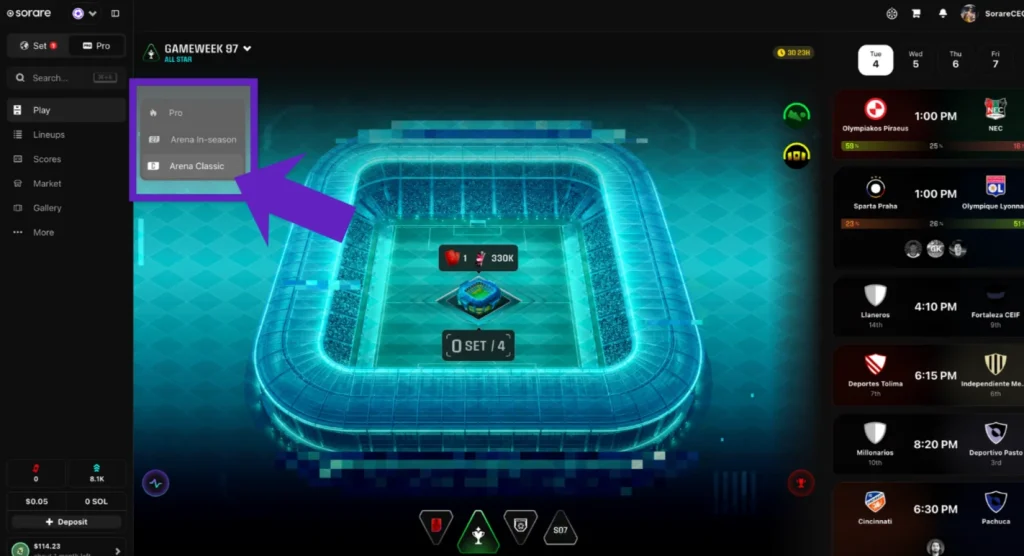
Check the screenshot below in which I’ve highlighted the spots in which you can activate the subs.
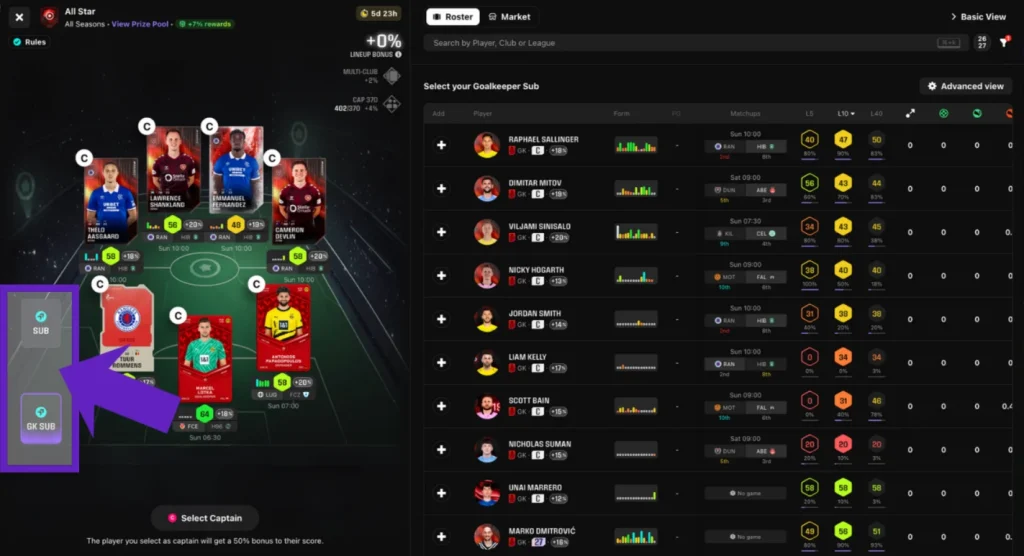
In practical terms, you choose your starters and backup cards before the relevant lineup or Game Week lock applies. There is no separate substitution window that suddenly opens after the Game Week begins.
That’s worth remembering. You are preparing for a possible DNP in advance, not reacting to one afterward.
What happens after matches start?
Once your starter’s match begins, you can’t wait to see his score and then decide whether your substitute would have been better.
If the starter takes the field, even from the bench, the substitution doesn’t trigger. His actual Sorare score counts.
If he never plays and finishes with a DNP, Sorare will automatically bring in your eligible substitute. You don’t need to be online when this happens.
That last point is important for me. I don’t want substitutions to turn weekends into a constant lineup monitoring exercise. The automatic system gives us DNP protection without requiring us to check Sorare before every kickoff.
So think of your substitutes as insurance selected in advance. Once football starts, Sorare applies the rules for you.
Which Competitions Allow Substitutions?

Substitutions on Sorare are available exclusively in Arena competitions.
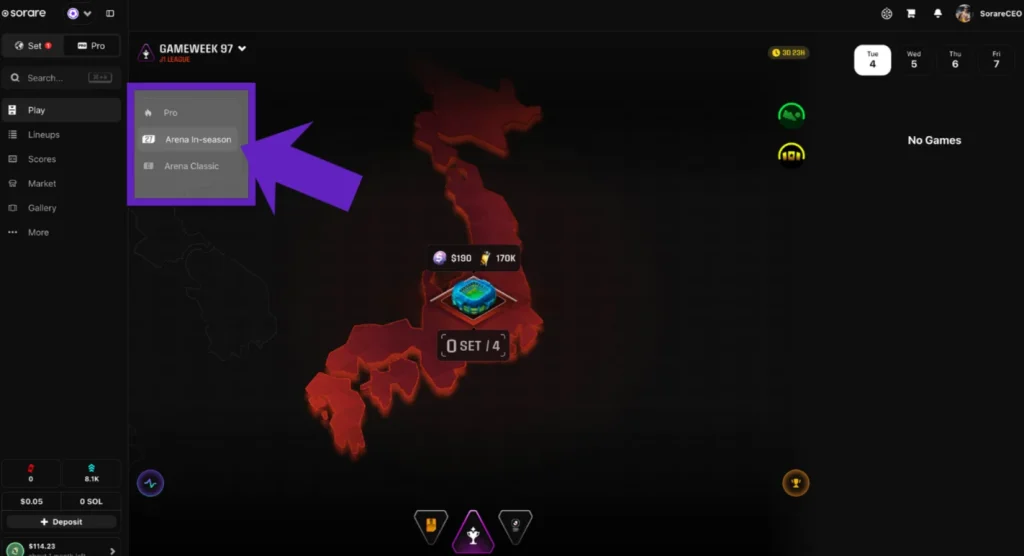
For Sorare 27, the feature was introduced as part of the updated Arena experience rather than as a universal rule across every game mode.
That distinction matters because Sorare now gives us several ways to play. A feature available in Arena doesn’t automatically apply to Hot Streaks or Arcade Sets.
Within Arena, substitutions apply to both Classic and In Season competitions, but it’s important to note that they’re not available in the 10-player Arena Rooms.
As you probably now, Classic Arena uses SO7 lineups, while In Season Arena uses SO5. The substitution system gives both formats the same DNP protection without changing their normal starting lineup requirements.
Knowing where substitutions work is the easy part. The more interesting question is what we can actually do with them strategically… because two backup slots change more than just DNP protection.
My Sorare Substitution Strategy

My approach to Sorare substitutions is pretty simple. I use them to protect the weakest point in my lineup rather than trying to squeeze extra upside from the bench.
I start with my normal lineup first. I check expected minutes, injuries, suspensions, recent rotation, fixtures, and kickoff times. Only then do I decide which starters actually need protection.
For goalkeeper, there isn’t much to overthink. If I have an eligible backup available that I don’t plan to use in a separate lineup, I’ll usually add him. A goalkeeper DNP gives you very few ways out once that position locks.
The outfield substitute requires more thought. I’ll normally identify the starter with the highest realistic DNP risk. If that’s a midfielder, I’ll look for an eligible midfielder with safer minutes. If it’s a forward, I’ll do the same with my forwards.
The Extra slot can change that calculation because any eligible outfield substitute can cover it. If one of my uncertain players fits naturally into Extra, that flexibility becomes useful.
I also value reliability over ceiling on the bench. Give me a regular starter with a decent matchup over a high upside player who might spend 70 minutes watching from the sideline.
Remember, I’m not choosing the substitute because I expect him to beat my starter. I’m choosing him because I want somebody ready if my starter doesn’t play at all.
Kickoff times come next. Whenever possible, I want to know when official lineups become available and which of my cards will lock first. If I can wait for confirmed team news without losing another option, I will 🙂
I also wouldn’t deliberately fill my starting lineup with questionable players just because substitutions exist. One goalkeeper and one outfield backup cannot rescue several DNPs.
So my basic process looks like this:
- build the best starting lineup first
- identify the biggest DNP risks
- then use the substitute slots to cover those risks wherever possible
Nothing revolutionary. But that’s exactly why I like the feature. Substitutions reward another small piece of preparation without completely removing the uncertainty that makes lineup building interesting.
Common Mistakes to Avoid
Subs are fairly easy to understand once you know the rules. Most mistakes will probably come from treating the bench as two extra lineup spots rather than DNP protection.
I’ve made enough lineup mistakes since 2022 to know that the small details usually hurt most. With substitutions, these are the ones I’d watch closely.
- Using the wrong outfield position – your outfield substitute doesn’t automatically cover every DEF, MID, and FWD starter. Normal positional replacements need to match, while Extra gives you more flexibility.
- Choosing upside instead of reliability – your substitute’s main job is to play if needed. A regular starter can be more useful here than a better scorer with serious rotation risk.
- Expecting a substitute to replace a poor score – If your starter plays, his score counts. You can’t swap out a 25 because your substitute happened to score 80.
- Assuming a late cameo means DNP – it doesn’t. If your starter gets onto the pitch, even very late, the DNP protection won’t save you from his resulting score.
- Giving the substitute his own DNP risk – backing up one rotation risk with another rotation risk rather defeats the point.
- Trying to protect too many uncertain starters – one outfield substitute can’t rescue an entire lineup. If three players might not start, I’d reconsider the starting lineup itself.
- Forgetting about kickoff and lock times – official starting lineups can sometimes give you information before a player locks. Don’t guess when you have the opportunity to know.
There’s also one mistake I think experienced managers could easily make at first: overthinking the feature.
You don’t need some complicated substitution formula for every Arena lineup. Look for your biggest DNP risks, check which cards can legally cover them, and prioritize substitutes likely to play. That’s basically it 🙂
The better you already are at checking expected minutes and team news, the easier substitutions should be to use. They add another safety layer to good lineup building rather than replacing it.
Are Substitutions a Good Addition to Sorare?

Yes. I think substitutions are a good addition, mainly because they solve one of the most frustrating parts of fantasy football without removing much strategy.
A surprise DNP has always felt different from simply choosing a player who performs badly. I can accept a striker missing chances or a defender conceding three goals. At least my selection actually played.
Losing an entire lineup because an expected starter never leaves the bench is harder to take.
Substitutions reduce that problem, but they don’t completely protect us. You only have limited cover, positions matter, and your substitute needs to be eligible. Your starter can also appear for a few minutes and leave you with a poor score anyway.
I like that balance because if Sorare gave us a large bench and automatically selected the best scores afterward, lineup building would become much less important. We could simply throw several possibilities at each position and let the system clean up our mistakes.
Join Sorare with code SORARECEO to get free $150 for your first cards.
SORARECEO
COPY
SorareCEO.com is a certified affiliate partner of Sorare. This is an exclusive bonus for my readers.
That’s not what Sorare substitutions do. You still need to research expected minutes, understand rotation, check injuries, and make decisions before players the Game Week locks.
The feature may even reward good preparation more than before. Choosing the right substitute means thinking about position, eligibility, kickoff time, and the likelihood that the backup actually plays.
There is one downside: Sorare already has plenty of rules for new managers to learn, and substitutions add another layer. Arena lineup building is slightly more complicated now than simply choosing your starters and submitting them.
Still, I think the tradeoff is worth it. The rule isn’t difficult once you’ve used it a few times, and the benefit is easy to understand.
After years of watching DNPs destroy lineups, I’m happy to have another tool against them. It won’t save every Game Week… but it should save enough of them to matter 🙂